Saving the Sentinels


Storm damages monument in Riverside, Lions rally to help restore Civil War cannon
The Spencer Lions Club is calling on the community to help restore a symbol of local and national history. On Saturday, April 18, the club will host a fundraiser meal at the Lions Club Building to raise funds for the restoration of a historic Civil War-era cannon at Riverside Cemetery.
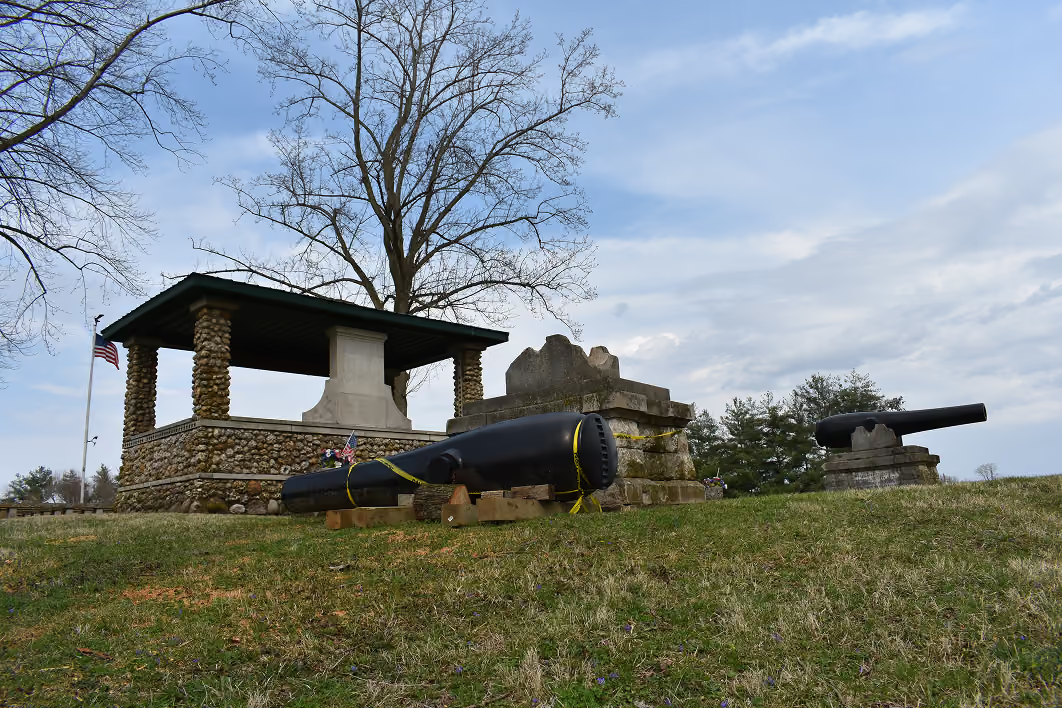
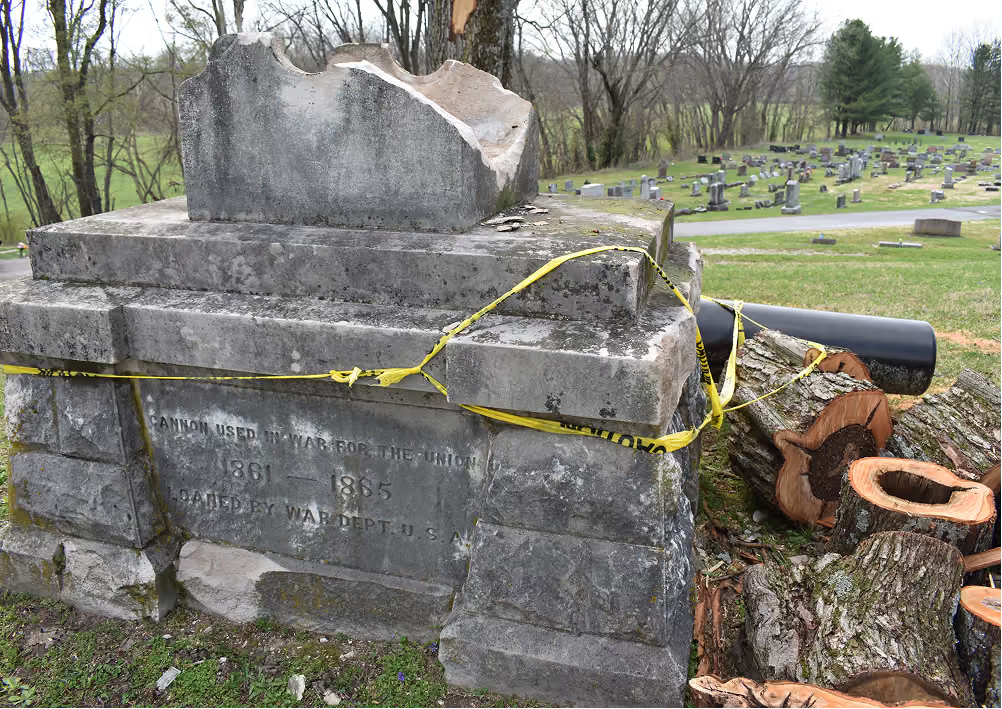
The fundraiser, running from 4 to 7 p.m., features a menu of hot dog and fish meals. Every dollar raised is dedicated to the "Riverside Cemetery Cannon Restoration" project. The urgency of the event follows a recent storm that sent a large tree crashing onto one of the memorials, damaging the historic stone support and dislodging the heavy iron barrel.
"We have two eight-inch caliber Rodman cannons, used by the Union Army during the Civil War (1862-65)," explained Keith Bucklew, President of the Riverside Cemetery Board. "The cannons were emplaced at Riverside in 1905 and face to the south. These early model field artillery cannons were cast in 1861 by the Fort Pitt Foundry, Pittsburgh, Pennsylvania. Each cannon weighs 8,600 pounds. The work to restore the [damaged] cannon to its position will also require a new limestone slab. We have a plan to get the situation fixed, but it will take a few weeks."
While many envision cannons on wheeled wooden carriages, the "silent sentinels" at Riverside are mounted on a cannon "plinth," also known as a monumental carriage base. These permanent stone structures were specifically designed for stationary display. In architectural terms, the plinth is the heavy stone base or platform upon which the monument sits, while the specific top portion of the stone carved to cradle the "trunnions"—the cylinders on the side of the barrel—is referred to as the trunnion bed.
As the inscription on the side of the damaged plinth notes, the barrel itself was "Loaned by War Dept. U.S.A.," while the stone base was provided by the Gettysburg Post No. 93 G.A.R. and W.R.C. No. 108 in 1905. This display style was reportedly a popular way for communities in the early 1900s to display surplus Civil War ordnance, bypassing the need for high-maintenance wooden carriages in favor of a lasting limestone tribute.
The cannons are a central feature of the Soldiers Memorial Pavilion, a site deeply woven into the fabric of Spencer's heritage. Dedicated on May 30, 1939, the pavilion was erected through the efforts of the Women's Relief Corps of Spencer. It serves as a permanent tribute to those who served the United States, housing the names of local heroes and providing a solemn backdrop for annual Memorial Day observances.
The pavilion and its surrounding grounds were designed by famed sculptor and Spencer native E.M. Viquesney. Best known nationally for his "Spirit of the American Doughboy" statues, Viquesney lived and worked in Spencer, often donating his artistic vision to local projects. His handiwork is visible in the design of the pavilion, which was intended not only as a memorial but as a gallery for his "Spirit of America" plaque.
The Lions Club invites the public to "eat for a cause" at 59 N. Main St., Spencer, to help repair the storm damage and ensure these monuments stand for another century.
The menu includes:
• Spencer hot dog meal ($10): Includes "all the fixins," side, dessert and drink.
• Fish meal ($10): Includes side, dessert and drink.
• À la carte: hot dogs ($1), fish sandwiches ($6), and ice cream cups ($1).
Sides for the meals include a choice of coleslaw, chips or macaroni salad.