S-OCS students experience pioneer life at Cataract Schoolhouse


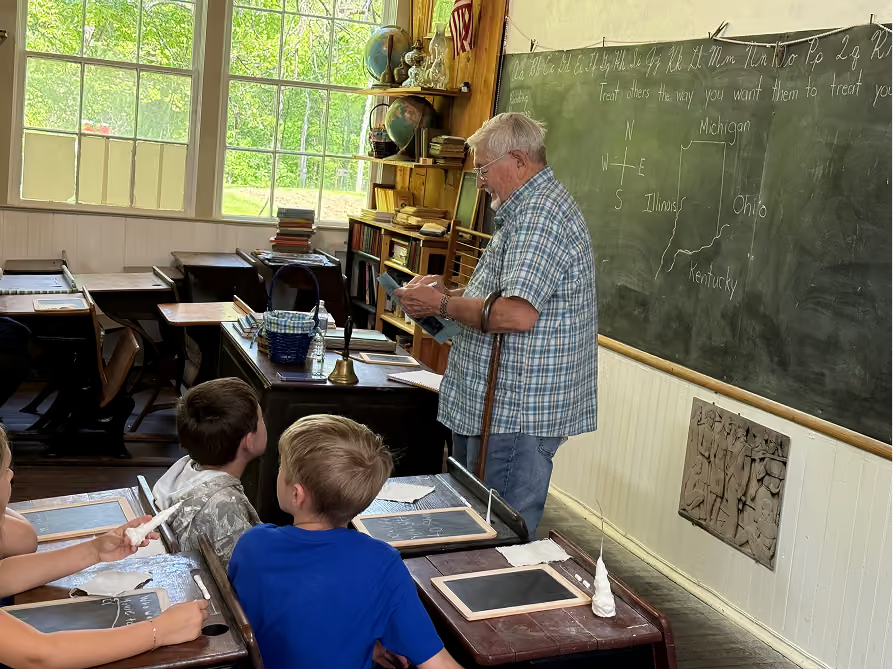

Owen County third-grade students traveled more than 100 years back through time in early May at the one-room Cataract Schoolhouse.
The girls wore dresses, skirts and aprons and one boy brought dried candies and pretzel sticks to share, third-grade teacher at Spencer Elementary School Kristine Mangia, said.
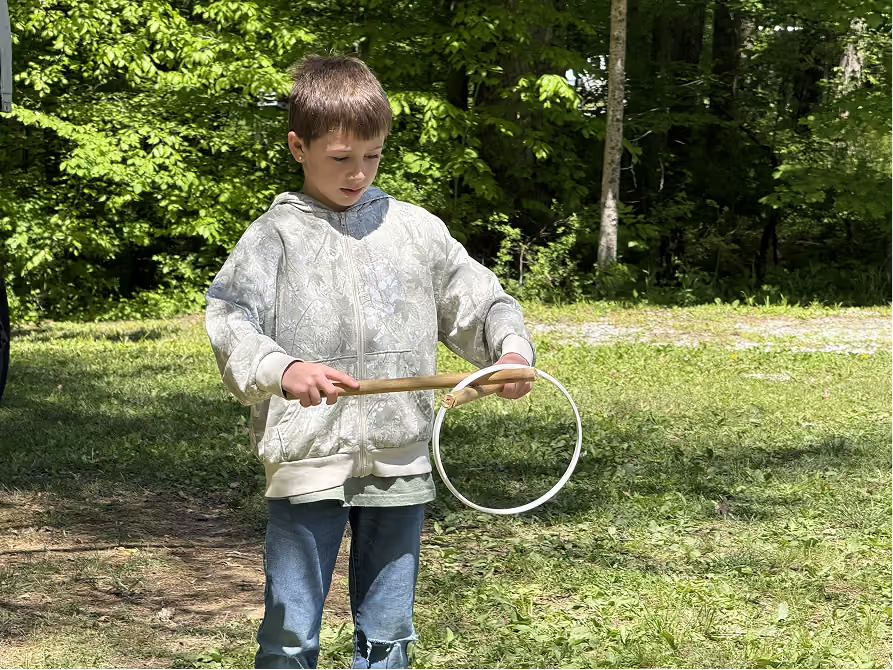
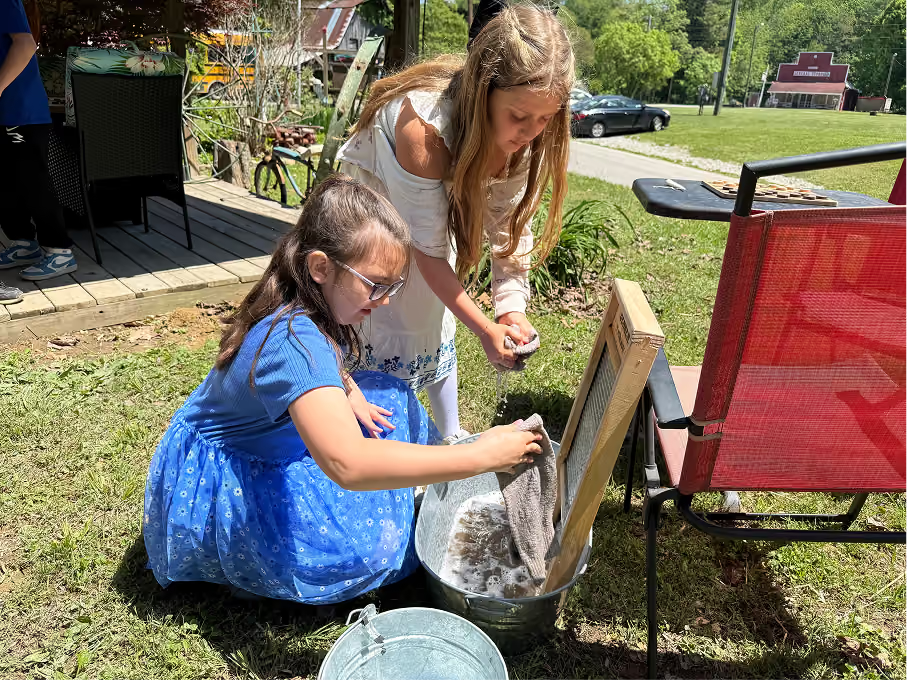
For a few days, starting on May 4, seven third-grade classes from Spencer, Gosport and McCormick’s Creek Elementary Schools simulated life during pioneer times, with no electricity. They played hoop and stick, clambered over historic wagons, made candles, roasted marshmallows, dissected lima beans, cleaned clothes on a washboard and listened to a storyteller.
Before heading to the schoolhouse, Mangia’s class read “Sarah, Plain and Tall,” a children’s book about life on the prairie, to prepare for the experience. Other classes read “Little House on the Prairie” and watched videos recreating life at the time.
Despite the clear differences in technological advancement in the classroom between today and 1886, when the schoolhouse was built, in many ways, teaching 8-and-9 year-olds stays the same.
In the classroom, volunteer Beth Bougher led the kids in a lesson that began with the Pledge of Allegiance. Before the schoolhouse shut down in 1947, it taught children from first through eighth-grade. The field trip students learned reading, math, social studies, handwriting and elocution, where they were taught how to emphasize clear pronunciation.
“My kids had fun with that, because it was using tongue twisters,” Mangia said. “And so being able to speak clearly, and they just ate it up. It was really fun to watch, and I was thinking, they didn't talk, they didn't interrupt, and it was really good.”
The schoolhouse is filled with historic desks, a blackboard, 48-star American flag and an original water jug.
During one writing lesson, Bougher discussed what indicates when a new paragraph starts. One student stood up and told her that making a new paragraph requires hitting the enter and tab keys.
“It was just kind of that they're relating what it was like back then to today,” Mangia said. “There is a lot of things that stay the same. Kids back then were very similar to what they do now and what they’ve learned.”
The Owen County Community Foundation helped fund the pilot program, giving the students the chance to experience one of two one-room schoolhouses in the state on the Country School Association of America’s national registry, with the other being the Pittsboro One Room School in Pittsboro, Indiana.
“There’s intrinsic value in the one-room schoolhouse and the way it was done in historical times,” Michelle Roy, the schoolhouse’s owner, said.
The Cataract Schoolhouse is also unique, Roy said, because it is still in the exact spot it was when it was built.
Don Meek, 95, graduated from the schoolhouse in 1945, following in his father and grandfather’s footsteps. He fielded questions from the information-hungry students, such as what he used to have for lunch and what kind of games he used to play.
He told them he would bring his lunch in a pail and climb a green apple tree in the yard to sit and eat his lunch.
“As soon as he said his favorite thing about school was lunch and recess, all the kids went, ‘Ah, me too,’” Mangia said.
Meek said he enjoyed talking to the students and said they seemed interested in what he had to say. The experience the kids got is important in helping them learn about their heritage, he said.
“The time that I was growing up, we lived about a mile away and we lived on a farm,” he said. “We basically could survive off that farm. One of the things I’ve tried to stress is the importance of our farmers. Without our farmers, we would starve.”
Meek has lived in Cataract for nearly his whole life, and helped Roy in preserving the history of the schoolhouse as she has worked to keep the “history rich” plot alive.
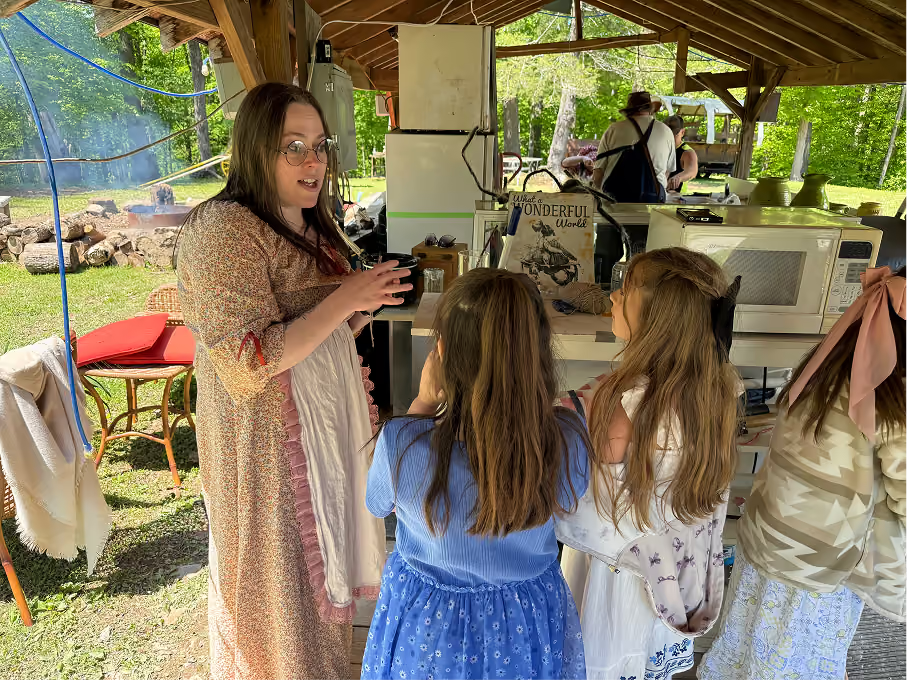
Jessica Turnbull, president of the Owen County Theatre and Arts Alliance, dressed the part during the trip and was a reenactor with a few other alliance volunteers. At her station, Turnbull worked with the kids to create their own drip candles, which they got to take home.
“The Gosport Elementary children were — I say this most lovingly — feral,” Turnbull said. “They were loving their lives and just really immersed in it. They were on the quest to make the biggest, funkiest, chunky candle, and they succeeded.”
After experiencing pioneer life, Mangia heard one student say she thinks she was born in the wrong time period and loved role playing the self-sufficient lifestyle of the 1800s.
Most things are automated and fast paced nowadays, Turnbull said, with constant information and sensory input coming in at all times.
“I feel like remembering that at one point, none of that existed and we had to focus solely on a task at a time to survive really quiets your mind a bit,” she said. “You have to focus.”
Taking the time to make a candle by immersing it in wax and watching it drip can be soothing, she said. Activities that let you get lost in thought and use your hands and motor skills give you a little bit of rest.
The classes commemorated the experience by taking a class photo on the side of the red, white and blue painted schoolhouse, in the exact spot students took their class photos when school was still in session.
Roy hopes that the program developed for the schoolhouse will continue and that Spencer-Owen Community School Corporation elementary schools will visit again. She also hopes to expand and offer trips to homeschool groups, surrounding counties and other schools.


.avif)