EPA gives update on groundwater contamination, outlines plans for potential future cleanup


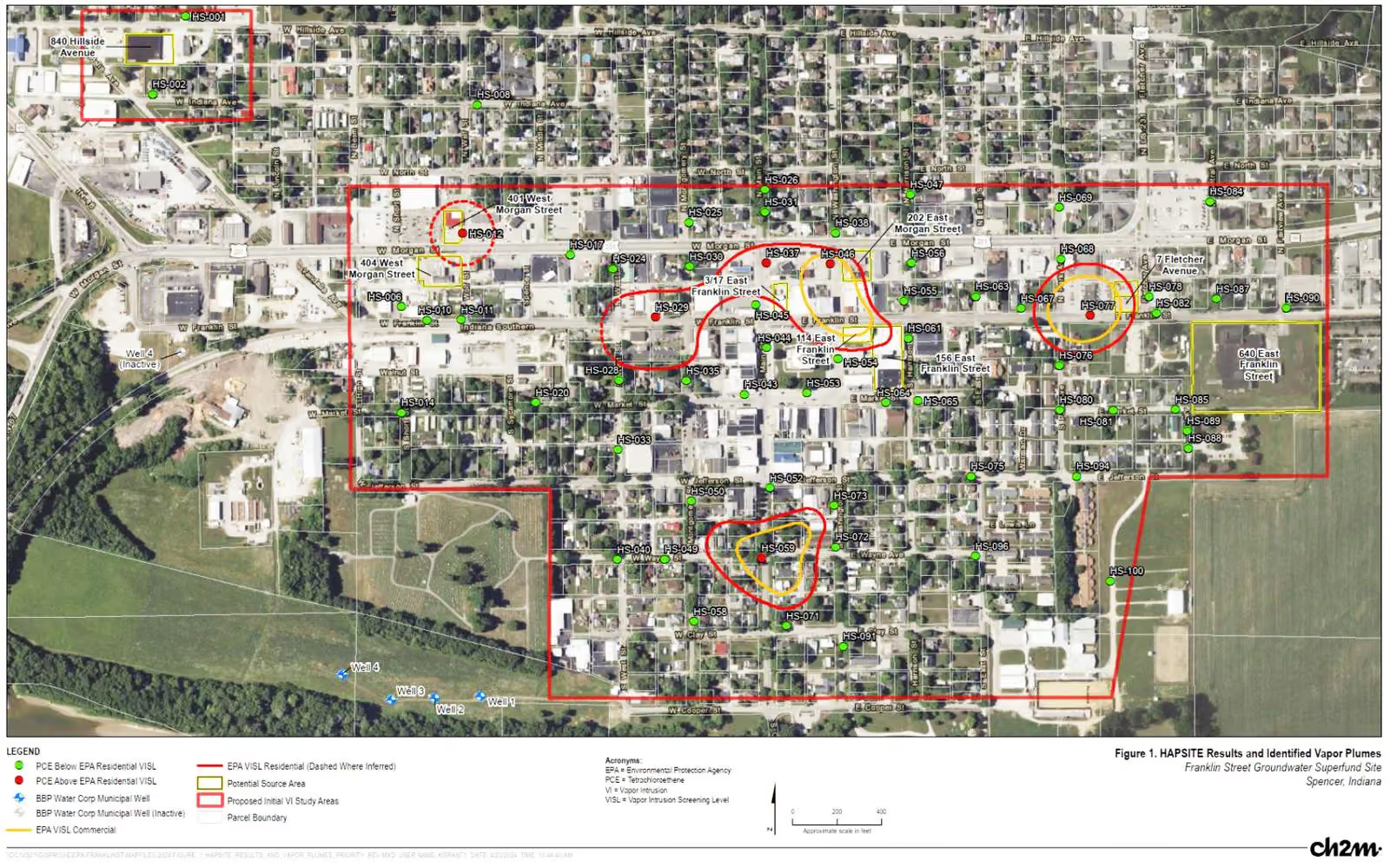
The Franklin Street Superfund Site in Spencer has been investigated further and the extent of the pollution has been much more defined, however, remediation and cleanup are still a long way away.
Environmental Protection Agency (EPA) Remedial Project Manager Dion Novak presented the latest findings in the soil and groundwater tests conducted around downtown Spencer. Since the last public update meeting in April of this year, the EPA has conducted 53 soil sample tests from 27 soil borings and seven new groundwater monitoring wells.
EPA officials conducted VOC monitoring at 100 households in Spencer to check for PCE vapor intrusion into basements or crawlspaces around the hot sites. Vapor from soil or groundwater pollution can make its way into cracks in basement foundations or through crawlspaces and expose residents to dangerous PCE vapor in a very similar way that radon does. The remediation for the two is also very similar: a system that creates a negative airflow system in the affected area, a monitoring system and sealing of cracks in foundations as possible. Fortunately, the latest testing based on 25 households found that none of the sites were in need of such mitigation.
A final round of groundwater sampling will be conducted in Nov. 2026. A full report on the extent of testing, found contamination, and remediation recommendations is being compiled by EPA staff and should be available sometime in 2027. Once this report is finished, there will be another report compiled that will assess the costs and feasibility of a remediation project based on available funding. This report is planned to be released in early 2028.
“Government tends to move slowly, but we want to make sure to do all of our tests and gather all of our information so that we can put together a remediation plan that addresses all the issues,” Novak said.
Based on historic research assisted by Spencer resident Tony Neff as well as chemical composition of the pollution in question, contamination has been linked to dry cleaners operating in the 1940s or ‘50s improperly handling dry-cleaning chemicals. This chemical, with extended exposure, can cause acute nervous system problems and with long-term exposure, various cancers and additional nervous-system disorders.
The chemical contamination was first noted by routine water quality testing done by BBP Water Corporation in Spencer. An air stripper and reverse-osmosis filters were installed in 2018 to filter the contamination out of the drinking water used for BBP customers. These machines cause PCE and other volatile organic compounds (VOCs) to be removed from the drinking water and disposed of safely once removed. No drinking water from BBP circulated to customers before the remediation measures were in place due to the fact that the contaminated wells in question were not in use for drinking water at the time. Current measures in place allow water to be used from the contaminated wells if necessary, as any contamination is filtered out during the water treatment process.
In 2020 and 2021, the EPA determined that PCE was unsafe to be exposed to in 60 of 61 of its designated uses and is phasing out all manufacture, sale and use of PCE by July of 2027. After the initial discovery of PCE by BBP, the Indiana Department of Environmental Management began investigating the contaminated wells and in 2018, the EPA declared Spencer a Superfund site and began their own local operations. Since then, a COVID delay, multiple government shutdowns, and funding uncertainties have pushed the operation timeline out through at least 2028.
A previous Owen County Superfund site at Neal’s Dump underwent remediation for PCB contamination in the groundwater, concluding in 2003.
To keep up with the progress of the Superfund site investigation and remediation and for additional maps and updates, visit www.epa.gov/superfund/franklinstreetgroundwater.