Owen County farmer named finalist for national ‘Women in the Field’ award

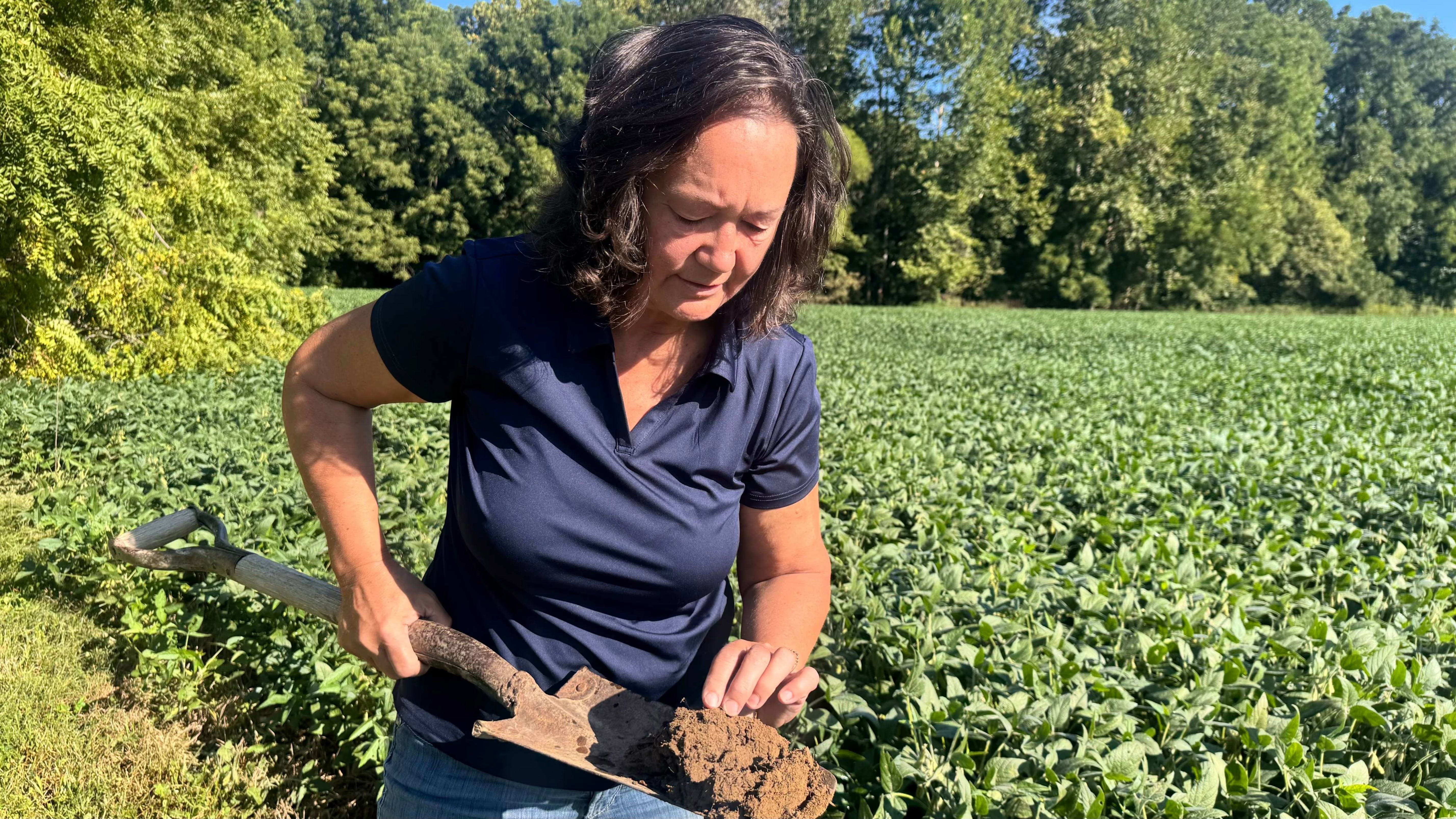
Doris Scully’s favorite time of year is during the fall. She harvests corn while the sun sets, driving a combine through the field, watching the yield monitor go up.
She thinks about the hard work she’s done to get to this point — planning, paying, spraying.
“You finally get to reap your reward there for harvest,” she said.
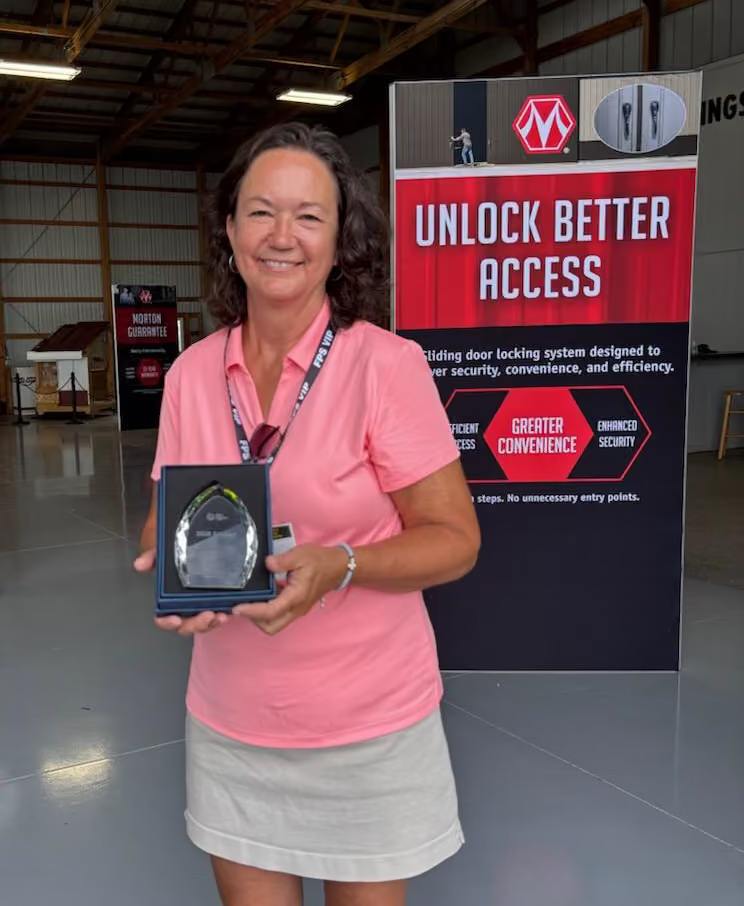
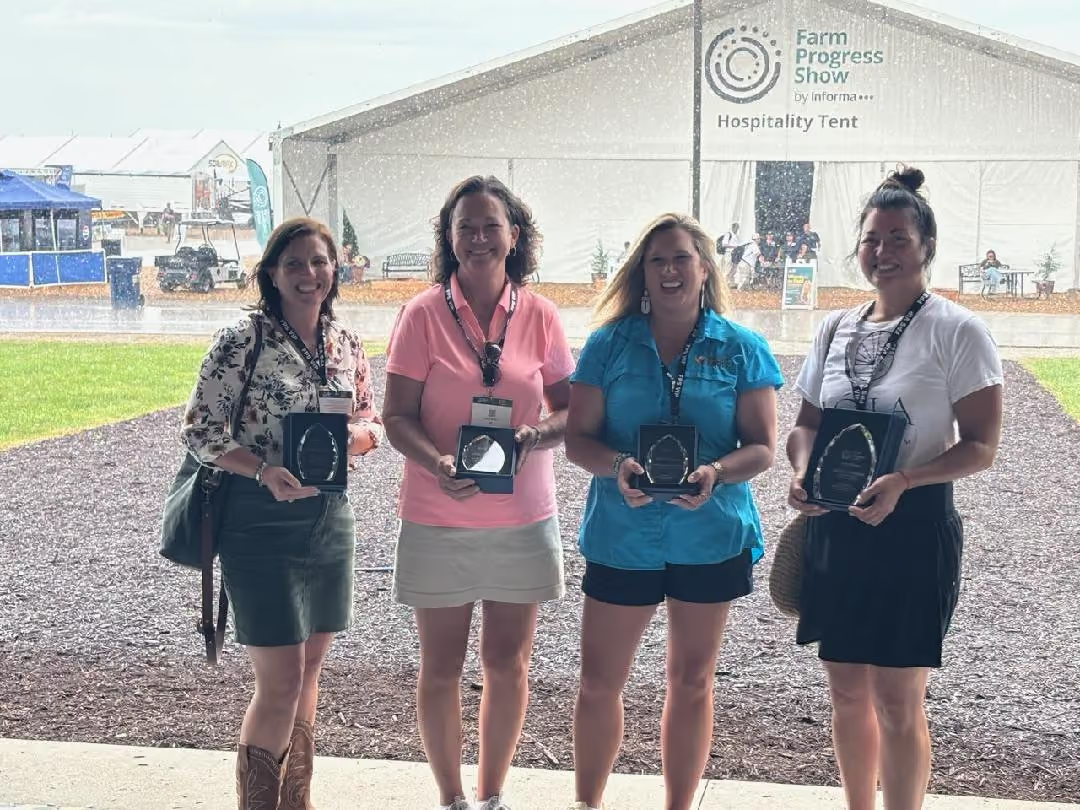
In July, Scully earned national recognition for her dedication and sustainable agriculture practices. She was named one of four finalists in the Farm Progress Women in the Field: Producer of the Year Award.
The award recognizes women who “exemplify excellence in production ag, demonstrate innovation and serve as leaders,” according to the Farm Progress website.
Scully operates Sips Family Farms in Spencer and manages 1,350 acres of land used for crops, hay, pasture and forest. The farm is home to beef cattle, corn and soybeans, all while implementing no-till farming and growing cover crops.
The Owen County farmer retired almost two years ago from a 37-year-long career with the Natural Resources Conservation Service (NRCS), an agency within the U.S. Department of Agriculture (USDA). But, for about as long, Scully and her husband worked full-time while raising their three sons and operating the farm.
In her position, Scully gave technical and financial assistance to agriculture producers. She spent her time visiting farmers and teaching them about soil health and best management practices, among other topics.
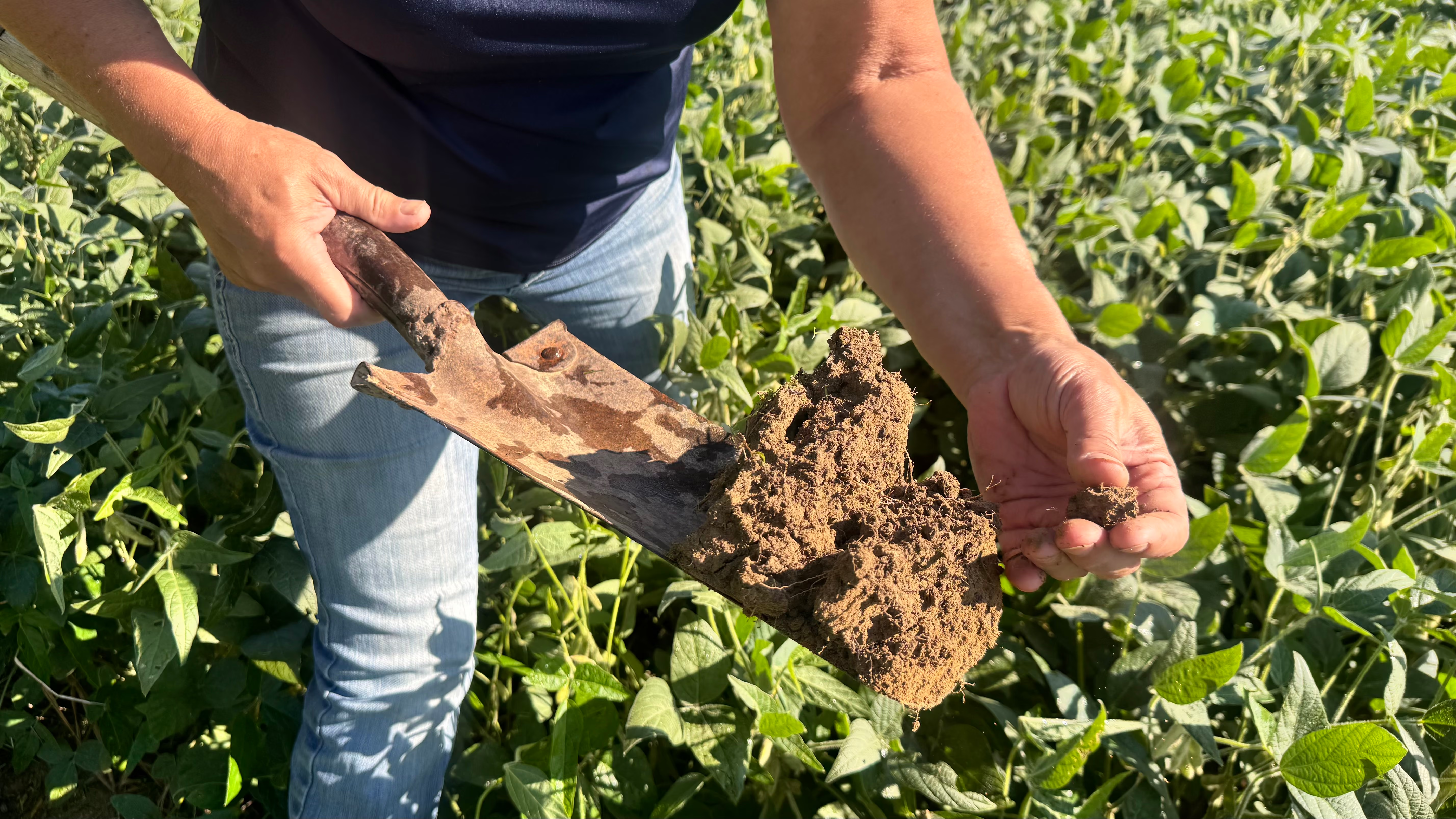
Historically, farmers have tilled their soil to prepare it for planting, control weeds and incorporate fertilizer, according to the USDA. But this practice releases carbon in the soil into the atmosphere, Scully said. Tilling compacts and finely breaks up the soil. So, when it rains, earthworm and root holes are clogged, and the water doesn’t get into the soil. No-till agriculture prevents erosion and allows the soil to soak up the rain.
Scully also champions her work in implementing cover crops on her farm. Cover crops are planted to protect soil from erosion, weeds, pests and diseases during off seasons, according to the USDA. The roots and plant matter above ground goes back into the soil and improves organic matter, benefiting the farm long-term, Scully said.
It’s an investment that leads to diverse microbiology and can fight the effects of climate change.
The organic matter stores water and nutrients in the soil for when it gets dry, and the soil is more able to handle severe changes, Scully said.
“We’re having what you call weather pattern changes and extreme temperatures, really hot, really cold,” Scully said. “Everything comes from the soil, and you’ve got to improve that soil.”
Scully emphasized the benefit of diversifying cover crops as well. She said monocultures only benefit one thing, and mixing up the crops feeds microbes in different ways.
Throughout her career, Scully has used what she’s learned about soil health to benefit other women in farming like herself. She’s worked with the Owen County Soil and Water Conservation District to host Women4theLand Learning Circles. This group of about 25 women meets to learn and connect with each other. Scully focuses on empowering them and teaching them about soil health and how to care for their land.
“I love to share knowledge,” Scully said. “I love it.”
Educating across Indiana and with other women in farming is one of the reasons Scully’s former NRCS coworker and district conservationist Don Donovan nominated her for the award.
“She practices what she preaches on the farm and learns there so she can bring some of that knowledge back to us,” Donovan said. “She’s innovative, she’s wanting to teach people how to farm in a better manner and support the sustainability and the regeneration of our soils. She’s taught a lot of people and spoke to a lot of people.”
Scully has also passed down her love and expertise for farming to her son, Mike Scully. Mike Scully grew up on the farm much like his mother, who was feeding chickens and gathering eggs from a very young age.
“We can’t get him off of it,” she said. “I think he’s the whole reason that we just keep plugging away and doing it, because he’s got that love of the land and I want to help him grow.”
When Doris Scully and her husband were both working full-time, they spent nights and weekends tending to the farm, doing all they could do.
“She (Doris Scully) set a very good example as far as work ethic and getting everything done,” Mike Scully said. “She’s a very timely worker. She’s on task at all times.”
To stay motivated working and caring for the farm, Doris Scully said her faith kept her going.
“I think God just puts a love of the land in your heart and you just do what you can do,” she said. “Knowing the end game that we wanted, what we wanted in the end was a better life for our kids. There’s nothing better than farm life.”
Mike Scully said being considered for an award recognizing Doris Scully’s work has been “a long time coming.” He said she’s earned it, and that soil health has been her life.
The award nominees were scheduled to be announced during the Farm Progress Show at 3 p.m. EST Sept. 2 in Boone, Iowa, however, stormy weather disrupted the ceremony.The nominees were instead honored in a smaller ceremony inside, under cover, where Wendy Johnson from Charles City, Iowa took home the top prize.
Doris Scully said she was humbled to hear about the nomination.
“I was surprised to even be nominated because I just do what I do because I like it and I love it and I live it,” Doris Scully said.