Navigating recovery and renewal: OPSF tackles storm recovery, long-term infrastructure upgrades

Managing a public state forest requires balancing ecological stewardship, infrastructure maintenance, and public accessibility. For Phillip Jones, property manager at Owen-Putnam State Forest (OPSF), that balancing act was put to an immediate test. Taking the helm of the property in May 2026 after managing Greene-Sullivan (2008–2011) and Morgan-Monroe (2011–2026) state forests, Jones had been on the job barely a month when disaster struck.
On June 17, 2026, at 9:44 p.m., an EF3 tornado packing 140 mph winds touched down two miles north of Spencer. The storm carved an 18.5-mile path that reached a half-mile wide at its peak, ripping through portions of Owen and Monroe counties. Within Owen-Putnam State Forest, over 852 acres were directly impacted.
Reflecting on his unexpected start, Jones emphasized how steering the early cleanup has reinforced his vision for property resilience and public communication.
"Stepping into this role just weeks before the tornado was certainly unexpected, but it really underscored the importance of being adaptable and staying focused," Jones said. "Working through such a significant recovery effort has strengthened my commitment to keeping the forest resilient—both in its natural systems and its infrastructure—and to maintaining clear communication with the public as we move forward."
Emergency Response and Collaborative Clearing
The immediate hours following the storm required rapid coordination among multi-agency first responders, law enforcement, area county agencies, and Indiana Department of Natural Resources (DNR) personnel.
"The initial emergency response involved much more than just DNR staff—law enforcement, first responders, and several county agencies were all part of those first critical hours," Jones said. "Our immediate priorities were making sure everyone was safe, addressing any medical needs, and reopening key roadways. Since then, I’ve been the only Owen-Putnam staff member directly assisting with the salvage operations at Morgan-Monroe, but I want to highlight the great work happening back home. Our office manager and two part-time laborers [Ruthie Speas, Justin Oldham, and Nowell Threat] have really stepped up and gone above and beyond to keep the property running smoothly while I’ve been away. Their support has made it possible for me to help out with the tornado recovery efforts."
Salvage Logging and Ecological Regeneration
Salvage operations at Morgan-Monroe have relied on clearcutting heavily damaged and downed timber to clear hazards and reset the forest floor. Addressing public concerns regarding the stark initial appearance of these clearcuts, Jones explained the long-term ecological necessity of creating young forest habitats to support forest health and wildlife.
"The tornado damage itself created areas that look like clearcuts, even before any salvage work began," Jones said. "What we're doing now is focused on removing downed and hazardous trees to make the area safe again. While the immediate appearance can be stark, this kind of large-scale disturbance actually creates young forest habitat that will support a wide variety of wildlife over the next couple of decades."
According to forestry management data, newly sunlit areas promote fast-growing canopy species such as yellow poplar (tulip tree), black cherry, bigtooth aspen, and American sycamore. Looking ahead at forest regeneration, Jones discussed what signs of natural wildlife benefits and returning bird species he and his team have observed.
"Once salvage work is finished, we’ll continue and even expand our monitoring efforts," Jones said. "These newly sunlit areas create great opportunities for early-successional species, and we expect increased bird and wildlife activity as regeneration continues. As data comes in, we’ll have a clearer picture of how different species are using the space."
Infrastructure Upgrades and Facility Modernization
Beyond storm recovery, recent upgrades across the forest’s 6,688 acres include a new tornado siren on Keene Road, facility maintenance, and ongoing trail repairs.
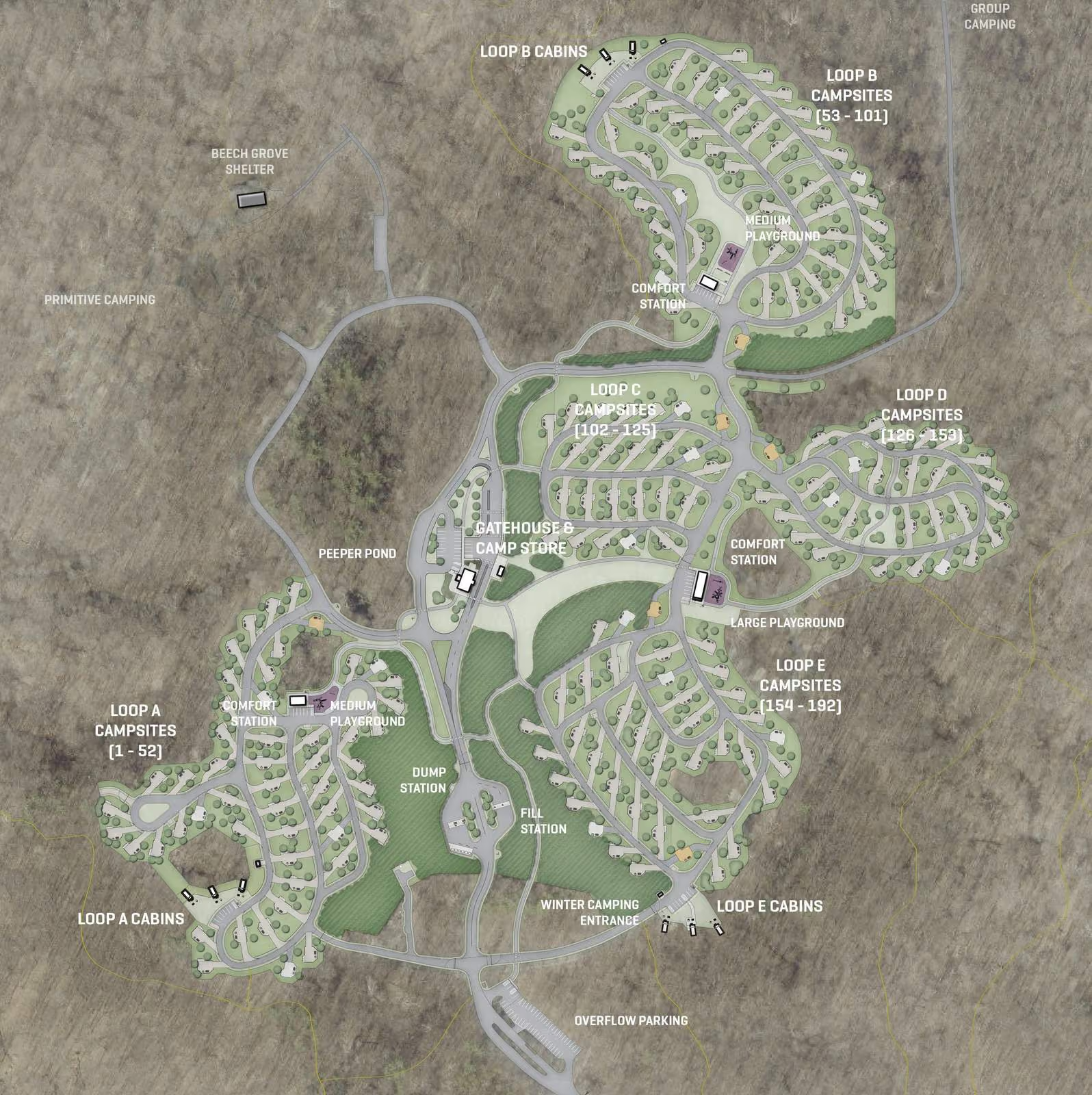
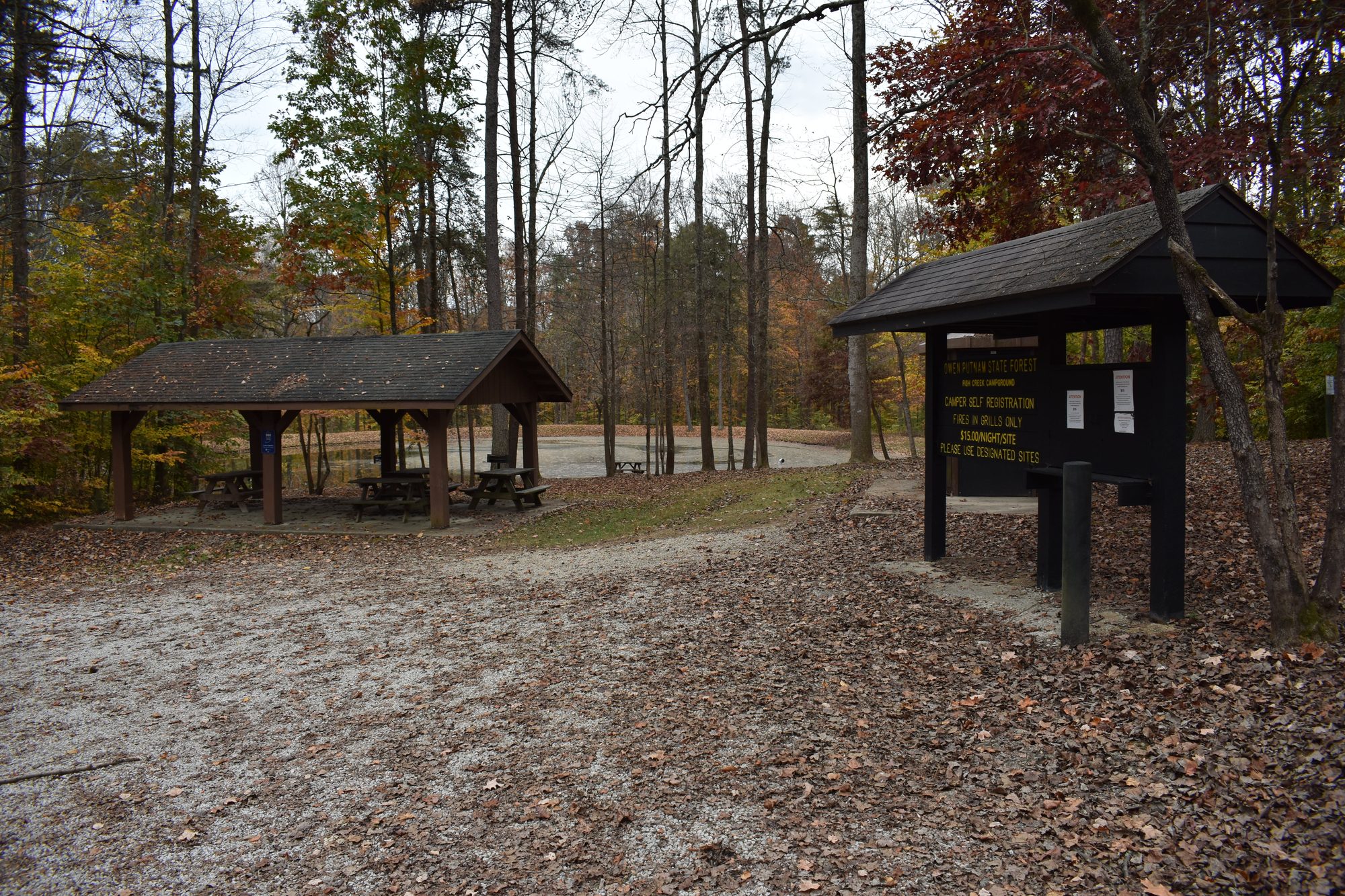
Highlighting major 2026 infrastructure projects, including a new RV dump station and advanced wastewater management system at Fish Creek Campground, Jones emphasized how vital equipment assistance from Yellowwood State Forest and Jackson-Washington State Forest has been during site preparation.
"Support from our neighboring forests has been a big help this year," Jones said. "While I haven’t yet used the stump grinder in the future septic field, I have used it at the Rattlesnake Road residence and throughout the campgrounds. The initial clearing for the new septic field at Fish Creek was done using a Fecon-type mulching head on a Bobcat skid steer that Jackson-Washington State Forest loaned to us. Their assistance allowed us to get the site opened up efficiently so we could move on to the next stages of the project."
Jones noted the upgraded wastewater design modernizes infrastructure while keeping options open for the future.
"The new system will replace the old dump station and office septic setup with one modern, efficient system that meets current requirements," Jones said. "One of the advantages of the design is that it allows for the possibility of future campground expansion if that’s ever pursued. I should note that I haven’t seen any plans for expansion at this point, but the infrastructure is being built in a way that won’t limit the property in the future."
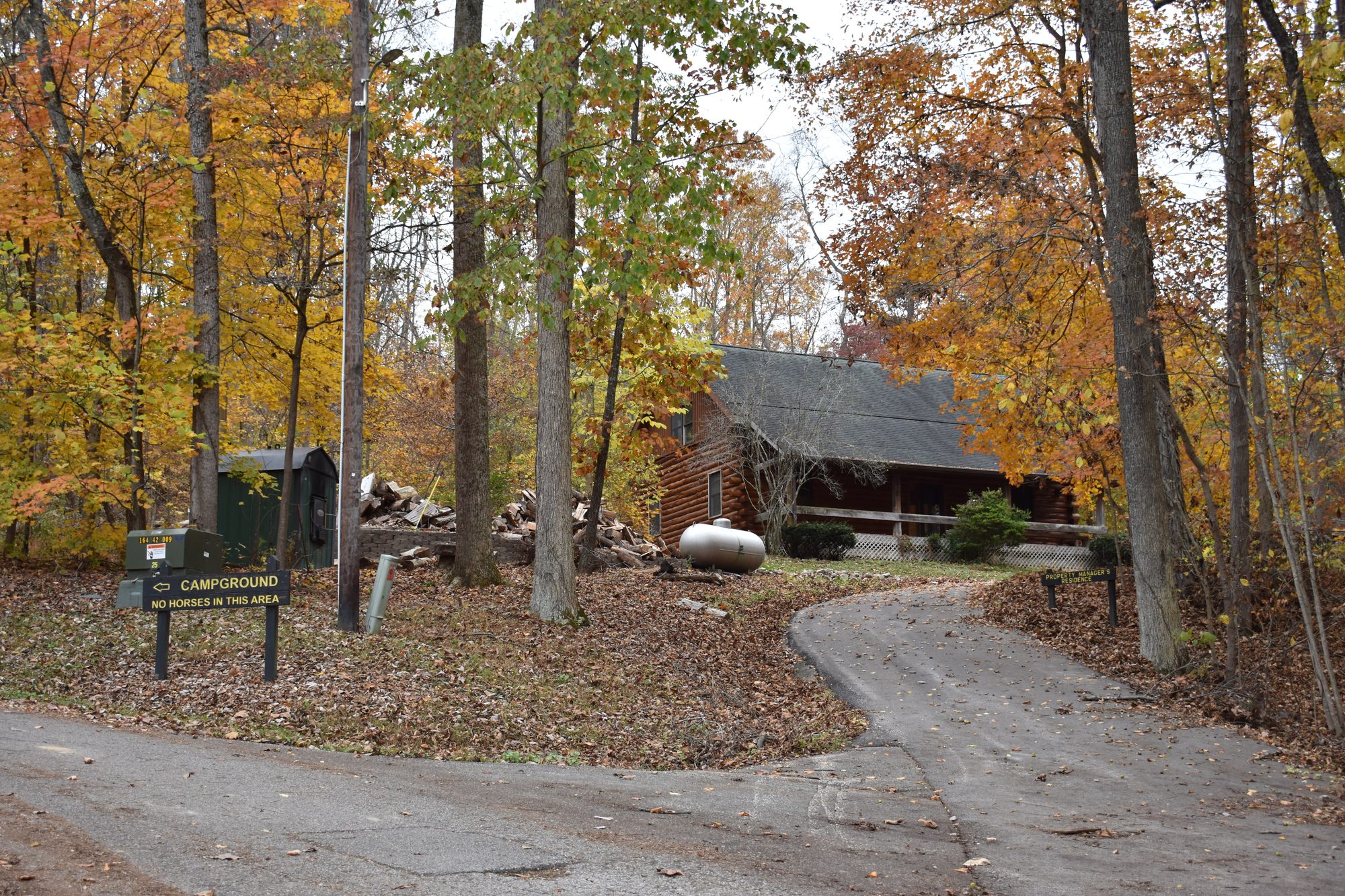
Upcoming interior updates at the Rattlesnake Road residence, including a second bathroom, dedicated laundry room, and new white oak flooring, are designed to improve practical usability for caretakers.
"Like any long-serving structure, the residence needs updates to stay functional and comfortable," Jones said. "Adding a second bathroom, dedicated laundry space, and durable flooring will make the home more practical for staff or caretakers. When major components like the water heater need replacement, that’s often the best opportunity to bring things up to code and improve overall usability."
Addressing ongoing risk-tree removals and utility safety, Jones highlighted why tackling specific hazards remains a priority.
"Addressing risk trees and making trail and road improvements is something we focus on every year, but the storm damage has made those efforts especially important right now," Jones said. "We’re also taking care of some interior safety issues at the Rattlesnake Road residence, including relocating the water heater. The existing unit is positioned under the central stairwell and uses a single-wall flue pipe, which isn’t an ideal setup and can create a fire hazard over time. Moving it to a safer location is part of our overall effort to reduce risks and ensure the residence stays safe and functional for staff."
Setting Priorities for the Future
Reflecting on recent accomplishments, Jones shared his core operational priorities for the property moving forward.
"My priorities are to continue managing the forest sustainably, maintain and enhance recreation opportunities, and ensure that trails, roads, and facilities are safe and enjoyable for everyone who visits Owen-Putnam," Jones said.
Concluding with a look ahead, Jones offered final thoughts on keeping the public informed about upcoming developments.
"We have several projects in the planning stages that continue to focus on forest health, infrastructure improvements, and enhancing the visitor experience," Jones said. "As these projects develop, we look forward to sharing updates with the public and highlighting the positive progress happening throughout Owen-Putnam State Forest."
Established in 1948, Owen-Putnam State Forest encompasses landholdings across Owen and Putnam counties, offering primitive camping, hunting, fishing, and over 15 miles of trails amid rolling hardwood hills and sandstone bluffs.