COLUMN: Trailing or Leading: Trails do their part for flood relief

Imagine you live in a neighborhood that is on the edge of a big, empty ditch. Every year, when a large rainstorm moves through town, the ditch fills with water. But most of the time, the ditch just sits there, empty.
Community leaders might be tempted to build more houses in the ditch. After all, it rarely fills with water. They could add some dirt and build the houses on top of that. Or they could add piles of dirt on each side to try to keep rainwater out. The community benefits from the jobs to build the houses. Plus, there are new taxpayers to help fund schools, police, and firefighters. Everybody wins.
Then it rains again. In fact, a huge rainstorm crosses the community. Worst storm in ten years. Usually, the water collects in the empty ditch. But the ditch isn’t empty, so it fills the new houses instead. Plus, because the houses take up space, there is leftover water. That water goes into the neighboring houses too.
Now, think of the same story. But instead of an empty ditch, there is a giant sponge. The giant sponge is squeezed dry, then paved over. When the big rainstorm comes to town, there is nothing to soak up the water, except the houses.
You have probably figured out that I’m talking about floodplains and wetlands. Floodplains and wetlands are annoying barriers when you are trying to develop a community. But watching the devastating, and deadly, flooding in Indiana this week, I can’t help but wonder if there were places along the swollen rivers that could have held more rainwater if they weren’t paved and developed.
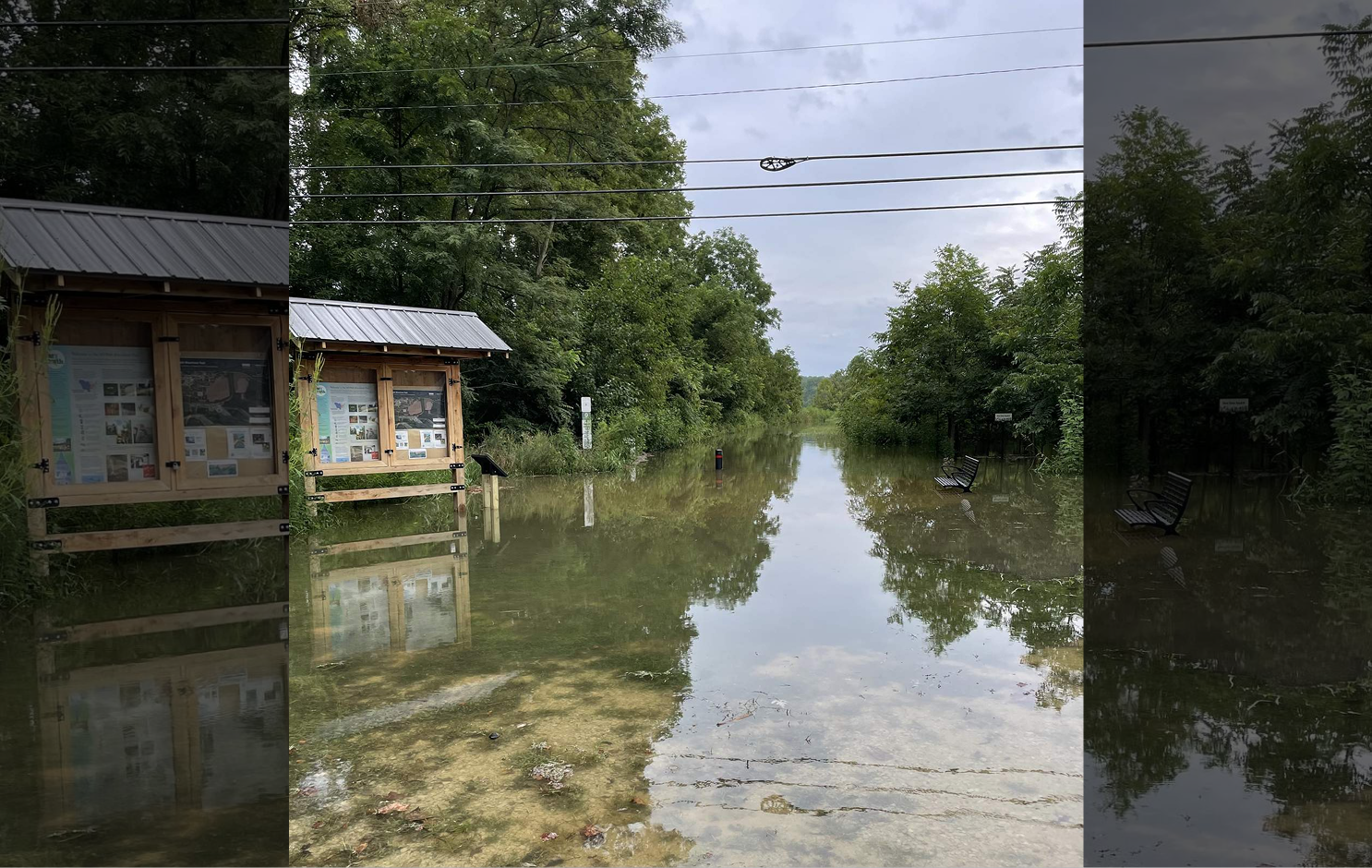
As I write this column, the same deadly flood is reaching Owen County. It is not predicted to be as bad as it was upstream. It is not predicted to top last year’s major flood. Still, as I am writing, the floodwaters are starting to cross MYPath.
That is okay. MYPath floods every year. It flooded this past March. The trees in the reforestation project are happy to drink as much of the floodwater as they can. Sometimes the flood leaves a mess, but it doesn’t really hurt anything. I’m saying this as the person who is responsible for getting the trail cleared. Still, I would rather hold as much water as possible on MYPath, The Wetlands Loop, and the Pollinator Garden, if it prevents tragedy and damage in the community.
Sure, a flooded trail is an annoyance. We are going to have to re-route the Wednesday walk this week. That’s okay. We’ll still laugh at corny jokes and look at interesting things.
Think about that for a moment. Owen County has created a trail through a floodplain that brings people together. And as we have talked about in previous columns, it provides an economic benefit to the community. We don’t hike the trail when it is underwater, but we still gather and the community still benefits.
We are about to do it again. Hopefully you have heard that the Owen County Chamber of Commerce was awarded a major grant to help build an arts park in Cooper Commons. Will it flood? Yes. The park will include artistic works, an arts market pavilion, parts of MYPath, and more. It will also hold floodwater when needed. It is designed for that. And it will have an economic benefit from visitors when it is dry, most of the year.
As communities around the state and nation continue to evaluate the August 2026 flood, I hope they turn to Owen County. We have learned to accept the floods. And we have learned that parks and trails can turn flood-prone areas into recreational and economic generators.


%202.avif)