COLUMN: Trailing or Leading: Follow the white shoes

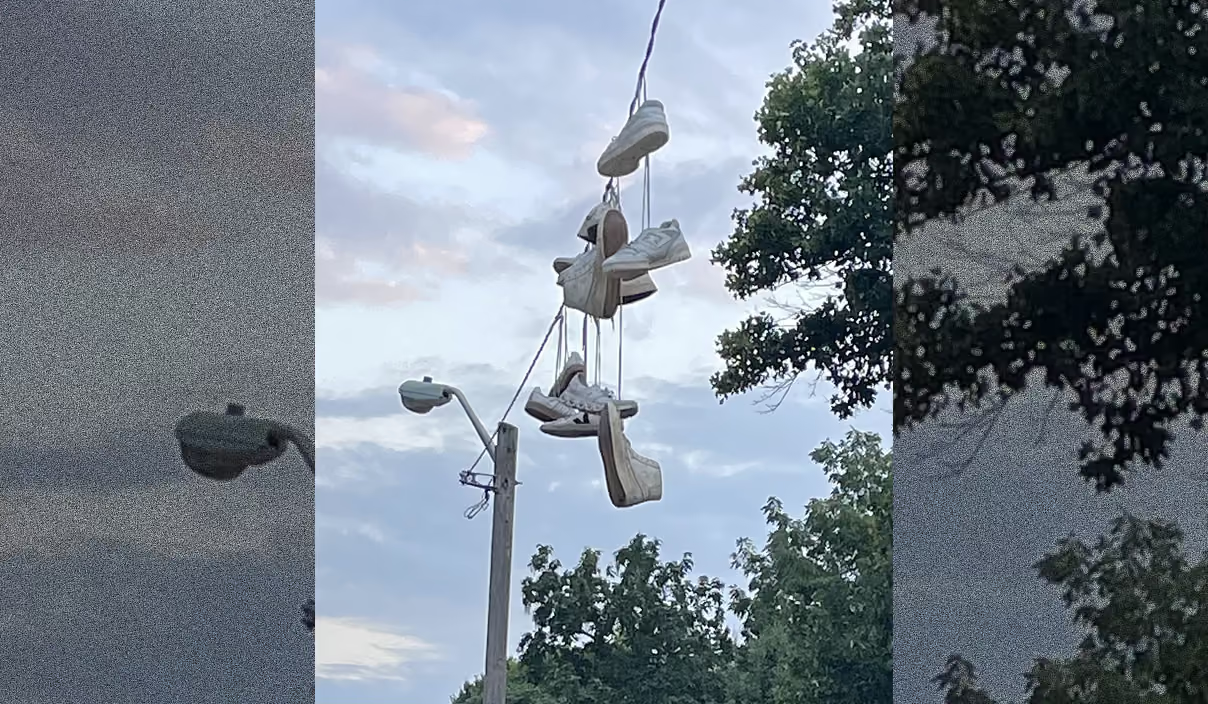
Sometimes when I am walking through a city, I see white tennis shoes hanging from the power lines. Somebody took the time to tie the shoes together, aim, and toss them high, hoping they would get caught and dangle from the lines. It seems like a complete waste of time and money. I’ve heard it is a signal for illegal purposes. But maybe it is something bigger.
I have always enjoyed attending talks by naturalists. It is entertaining and educational to go to our parks and participate in a presentation about birds, trees, bugs, or any kind of topic about nature and the world around us.
In recent years, I have received training to be a Certified Interpretive Guide and lead those types of park programs. In 2024, I worked part-time at McCormick’s Creek State Park where I led a variety of programs and helped feed snakes (but that’s another story).
Interpretation is more of an experiential kind of presentation. The audience gets to touch things, talk about things, and gain a better understanding of the natural world around them. When I talked about bobcats, I shared a bobcat skull and explained the predator’s eye sockets and shape of their teeth. When I talked about sinkholes, I provided a chance to stand in a sinkhole for perspective. When we looked for invertebrates in the creek, we put on boots, stood in the creek, and turned over rocks.
The recognized leader of the interpretation movement was former newspaper reporter, Freeman Tilden who wrote “Interpreting our Heritage” in 1957. He promoted talking about nature in a way that made people feel it while they were learning about it. “The chief aim of interpretation is not instruction, but provocation,” he said. His style of talking about nature became the standard for our National Park Service.
Now, let’s go back to McCormick’s Creek State Park. In 1923, an artist from Indianapolis was spending a lot of time in the park. Lucy Pitschler began walking through the park, pointing out different plants and animals and helping visitors notice the relationships and changes going on in the natural world. People started following her. The schedule for these hikes was exhausting, but visitors loved it.
And the crowds kept growing. In 1926, after she had been leading these popular nature walks for three years, the State of Indiana paid Lucy to keep doing naturalist programs at McCormick’s Creek. In 1927 the state hired naturalists to lead programs at Turkey Run and Clifty Falls. And it kept growing. By 2005 nearly every park and reservoir had at least one interpretive naturalist and multiple naturalist aids.
And it all started, at McCormick’s Creek, with Lucy Pitschler, the “little lady in the white tennis shoes” (because that is how we referred to accomplished women in the 1920s). Today, when Indiana park naturalists gather for their annual conference, held at McCormick’s Creek, they present the White Shoes Award to the outstanding naturalist of the year. It is quite an honor to be chosen from all the talented naturalists and interpreters in Indiana.
Indiana was one of the leaders in interpretive programs. It was a national movement that started at McCormick’s Creek State Park. But now I fear Indiana no longer holds that position. In 2025, state budget cuts eliminated part-time, seasonal interpretive positions, including mine. That is okay, I still volunteer and help when I can. But those positions have not come back. Unfortunately, funding is being cut for our national parks too.
So, when I see white tennis shoes hanging from a power line, I think somebody is making a statement. Remember Lucy Pitschler! Remember the power of nature walks! Remember the importance of our parks!


%202.avif)